Myneta.info is an open data repository platform of Association for Democratic Reforms (ADR).
 |
 |
|
|
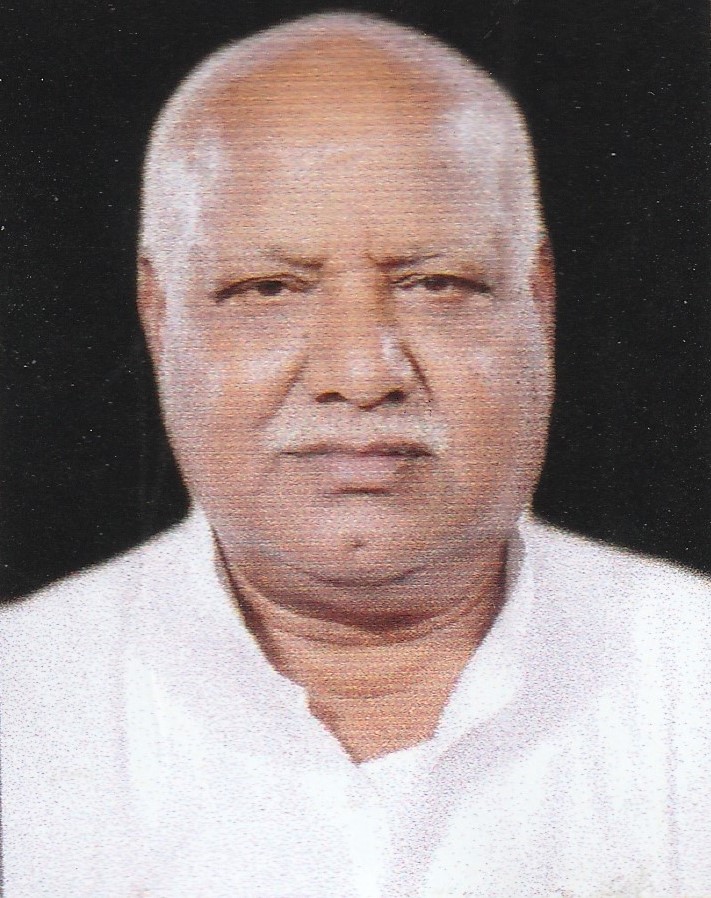
Self Profession:Agriculture, Pension received as former MLA and Democracy Fighter & Present MP Salary
Spouse Profession:Business
| Other Elections | ||
|---|---|---|
| Declaration in | Declared Assets | Declared Cases |
| Lok Sabha 2019 | Rs3,18,84,642 ~3 Crore+ | 1 |
| Loksabha 2014 | Rs1,51,27,861 ~1 Crore+ | 1 |
| Uttar Pradesh 2012 | Rs1,28,45,148 ~1 Crore+ | 1 |
| Lok Sabha 2009 | Rs78,49,185 ~78 Lacs+ | 1 |
| Click here for more details | ||
| Relation Type | PAN Given | Financial Year | Total Income Shown in ITR |
|---|---|---|---|
| self | Y | 2022 - 2023 | 2022 - 2023 ** Rs 13,90,000 ~ 13 Lacs+ 2021 - 2022 ** Rs 13,44,770 ~ 13 Lacs+ 2020 - 2021 ** Rs 8,43,130 ~ 8 Lacs+ 2019 - 2020 ** Rs 12,42,340 ~ 12 Lacs+ 2018 - 2019 ** Rs 12,91,380 ~ 12 Lacs+ |
| spouse | Y | 2022 - 2023 | 2022 - 2023 ** Rs 3,84,490 ~ 3 Lacs+ 2021 - 2022 ** Rs 3,34,540 ~ 3 Lacs+ 2020 - 2021 ** Rs 2,58,620 ~ 2 Lacs+ 2019 - 2020 ** Rs 4,70,740 ~ 4 Lacs+ 2018 - 2019 ** Rs 4,68,440 ~ 4 Lacs+ |
| huf | ** Nil ** Nil ** Nil ** Nil ** Nil | ||
| dependent1 | ** Nil ** Nil ** Nil ** Nil ** Nil | ||
| dependent2 | ** Nil ** Nil ** Nil ** Nil ** Nil | ||
| dependent3 | ** Nil ** Nil ** Nil ** Nil ** Nil |
Disclaimer: This information is an archive of the candidate's self-declared affidavit that was filed during the elections. The current status of this information may be different. For the latest available information, please refer to the affidavit filed by the candidate to the Election Commission in the most recent election.
Data Readability Report of Criminal Cases :No Problems in Reading Affidavit InformationDisclaimer: This information is an archive of the candidate's self-declared affidavit that was filed during the elections. The current status of this information may be different. For the latest available information, please refer to the affidavit filed by the candidate to the Election Commission in the most recent election.
Data Readability Report of Movable Assets :No Problems in Reading Affidavit InformationDisclaimer: This information is an archive of the candidate's self-declared affidavit that was filed during the elections. The current status of this information may be different. For the latest available information, please refer to the affidavit filed by the candidate to the Election Commission in the most recent election.
Data Readability Report of Immovable Assets :No Problems in Reading Affidavit InformationDisclaimer: This information is an archive of the candidate's self-declared affidavit that was filed during the elections. The current status of this information may be different. For the latest available information, please refer to the affidavit filed by the candidate to the Election Commission in the most recent election.
Data Readability Report of Liabilities :No Problems in Reading Affidavit Information
|
|
|
( यदि आप हलफनामों और इस पेज पर दी गयी जानकारी के बीच कोई विसंगति/भिन्नता पाते है तो आप नीचे के संदेश बॉक्स के उपयोग से हमें संदेश भेज सकते हैं)
Here’s a concise, informative post about Sidemount: Principles for Success, suitable for a blog, social media, or training group.
Title: Sidemount Diving: 5 Core Principles for Success
Sidemount isn’t just about looking cool or traveling with lighter gear. Done right, it’s a masterclass in streamlining, redundancy, and dive control. But success requires a shift in mindset from backmount.
Here are the 5 principles that separate smooth sidemount from a tangled mess:
1. Trim First, Everything Else Second In backmount, you adjust for trim. In sidemount, trim is the foundation. Your cylinders should lie flush along your torso—from armpit to hip. If your tanks are flopping outward or jamming into your ribs, adjust your sliding D-rings and bungee length. Head-to-toe horizontal with tanks locked in? That’s success.
2. Master the “Five Points of Contact” A stable sidemount rig connects to your body at five points:
Each point has a job. The shoulders guide, the hips secure, the butt plate prevents tank ascent. If any point is misaligned, your whole system wanders.
3. Valve Drills Are Non-Negotiable Sidemount puts valves behind your head. That means you cannot see them. You must reach, identify, and operate them by touch alone. Practice left-hand shutdowns and right-hand cross-reaches until they’re muscle memory. If you can’t shut down a free-flowing reg in zero vis, you’re not ready.
4. Respect the “Rule of Twos”… with a Twist Two cylinders, two independent first stages, two second stages, two tank valves. But sidemount’s real strength is gas management. Always know which reg is on which tank. Breathe down your long hose first (primary donate), then switch to your necklaced reg to isolate a problem. A common mistake: breathing both tanks evenly and losing your reserve without realizing it.
5. Stow for the Environment Open water vs. cave vs. wreck:
One universal rule: the long hose routes under the top tank bungee and over the lower cylinder. Any other routing guarantees entanglement.
Final Thought: Sidemount won’t fix bad buoyancy. It amplifies it. Master basic skills in backmount first, then transition. When done right, sidemount feels like flying—not fighting your gear.
What’s your #1 sidemount challenge? Drop it below. 👇
Would you like a shorter Instagram caption version or a technical deep-dive for cave divers?
"Sidemount: Principles For Success" outlines a methodology focusing on streamlining, stability, and redundancy to master sidemount diving, promoting a minimalist approach to gear configuration. The system emphasizes precise equipment setup—specifically harness and cylinder positioning—along with maintaining perfect horizontal trim for improved comfort and safety in both recreational and technical diving. For further reading, see the Facebook group discussion on Sidemount: Principles for Success Sidemount: Principles For Success (eBook) Feb 5, 2569 BE —
Sidemount: Principles For Success " is a comprehensive 251-page eBook by Andy Davis
(Scuba Tech Philippines) designed to help divers achieve a streamlined and efficient configuration. Core Foundations for Sidemount Success
Success in sidemount diving is built on specific "foundations" that separate experts from those struggling with cluttered gear: Customized Harness Fit
: Unlike backmount sets, a sidemount harness must be tailored like a suit. Waist Strap Height
: Crucial for determining where cylinders connect to your hips. Shoulder & D-ring Placement
: Must be precisely positioned to keep cylinders tucked under the armpits rather than floating or sinking. Precision Weighting & Trim
: Proper weighting is the most common hurdle for new divers. Horizontal Position
: You should achieve a flat, horizontal profile without needing to kick or scull to maintain it. Dynamic Trim
: Techniques vary based on whether you use steel or aluminum cylinders, as their buoyancy changes throughout the dive. Active Gas Management
: Because cylinders are independent, you must manage them as two separate systems. Regulator Switching
: Develop a habit of switching regulators at specific pressure intervals (PSI/BAR) to keep gas levels balanced. Advanced Propulsion : Mastering the helicopter turns backwards kicks
is essential for maneuverability and protecting fragile environments. Preparation Checklist for Your Next Post Sidemount- Principles For Success
If you are preparing a social media post or article, consider highlighting these key "hooks" from the Principles for Success eBook Sidemount: Principles For Success (eBook) - Buy Me a Coffee
Sidemount diving is more than just a gear configuration; for many, it is a philosophy of streamlining, stability, and total control. Whether you are a recreational diver looking for comfort or a technical explorer pushing into tight restrictions, success in sidemount depends on a few uncompromising principles.
Here is how to move from "tugging on tanks" to a truly sublime sidemount experience. 1. Stability is Your Foundation
In sidemount, stability is the hallmark of a great diver. Unlike backmount, where the center of gravity is fixed, sidemount allows you to "wear" your buoyancy. Success starts with correct weighting and dynamic trim.
The Flat Position: You must be able to hold a perfectly horizontal position without finning or using your hands.
Weight Distribution: Do not just copy your backmount weight belt. Sidemount requires strategic weight placement along the harness to keep your hips and shoulders in a single horizontal plane. 2. The Art of Cylinder Trim
One of the most common mistakes for beginners is allowing cylinders to "ride low" or "float away".
The Parallel Goal: Your cylinders should sit perfectly parallel to your torso. The valves should be tucked just under your armpits, never sinking below or floating above your body.
Adjusting for Buoyancy: As you breathe down aluminum cylinders, they become more buoyant and will want to "tail up." To fix this, you must use sliding D-rings or adjust your lower attachment points mid-dive to keep them in line with your body. 3. Master Your "Bungee Logic"
The upper attachment of your cylinders—usually a bungee system—is the "secret sauce" of a successful rig. A Guide to Modern Sidemount Diving - Scuba Tech Philippines
Sidemount: Principles for Success Sidemount diving—once the exclusive domain of extreme cave explorers—has evolved into one of the most popular configurations in technical and recreational diving. By moving cylinders from the back to the hips, divers gain unparalleled flexibility, streamlined efficiency, and enhanced safety. However, mastering this discipline requires more than just shifting gear; it demands a commitment to specific core principles. To achieve success in sidemount, a diver must focus on precise trim and buoyancy, rigorous equipment configuration, and proactive gas management. The Foundation of Trim and Buoyancy
The most immediate advantage of sidemount is the ability to achieve a perfectly horizontal profile. Unlike backmount, where the center of gravity sits high above the spine, sidemount places the weight of the cylinders along the diver’s center of buoyancy. Success depends on "tuning" this alignment. A diver must ensure that tanks remain parallel to the torso, neither dropping below the hips nor floating upward as they lose gas. Achieving this "flat" trim reduces drag, lowers CO2 production by minimizing effort, and allows for delicate propulsion techniques like the modified frog kick, which are essential for fragile environments. Streamlining and Equipment Configuration
In sidemount, the diver and the equipment should function as a single, integrated unit. A successful configuration is defined by "cleanness." Every hose must be routed tight to the body, and every bolt snap must be easily reachable yet tucked away to prevent entanglement. The principle of streamlining dictates that nothing should dangle. Success in this area is often a game of millimeters—adjusting the height of a cam band or the tension of a bungee can be the difference between a clumsy dive and effortless gliding. Because sidemount gear is highly customizable, the diver must develop an intimate understanding of their specific rig to solve problems instinctively underwater. Proactive Gas Management
Managing two independent gas sources is a mental shift from the manifolded doubles used in traditional technical diving. The fundamental principle for success here is balance. To maintain lateral stability and ensure a redundant supply in case of equipment failure, divers must switch regulators frequently to keep the pressure in both tanks relatively equal. This requires disciplined monitoring and manual dexterity. A successful sidemount diver views gas management not as a chore, but as a continuous cycle of situational awareness that ensures they always have a "lifeboat" of air available for themselves or a teammate. Conclusion
Success in sidemount diving is not found in the purchase of expensive hardware, but in the mastery of the fundamentals. By prioritizing a horizontal profile, refining gear configuration for maximum streamlining, and maintaining a disciplined gas-switching schedule, divers can unlock the full potential of this versatile system. Whether navigating a tight restriction in a cave or enjoying a reef at depth, these principles provide the foundation for a safer, more efficient, and more enjoyable underwater experience. To help you refine this essay or prepare for a dive: Specific word count (e.g., expanding to 1,000 words)
Target audience (e.g., beginner students vs. technical instructors)
Technical focus (e.g., cold water drysuit vs. warm water travel) Tell me which direction you'd like to take this next.
In the sprawling, chaotic city of Atherton, where skyscrapers clawed at a smoggy sky and the stock market’s heartbeat was the only rhythm anyone respected, there lived a man named Elias Voss. Elias was a master of a forgotten art: Sidemount Engineering.
Sidemount wasn’t about building taller, grander, or louder. It was about attaching a secondary system—a backup, an alternative, a parallel path—to an existing primary structure. In an age obsessed with singular, monolithic solutions, Elias was a quiet heretic. His motto, stitched above his workshop door, read: “The main engine always fails. The sidemount never steers, but it always lands.”
Elias had three principles for success, carved into his workbench:
For thirty years, Elias applied these principles to elevators, bridge supports, and city power grids. His peers laughed. “Why build two when one good one will do?” they’d say. Elias would smile and point to the sky. “Because the sky doesn’t care about your confidence.”
One autumn, a gleaming new tech conglomerate named OmniCore hired Elias. They had built the “Atherton Artery”—a single, magnetic-levitation train line that would carry 80% of the city’s commuters. It was a masterpiece of efficiency: no sidemount, no backup, just pure, streamlined power. The CEO, a woman named Daria Sol, believed redundancy was failure dressed up as caution.
“Your principles are fear-based, Elias,” Daria said, showing him the Artery’s control room. A single, beautiful crystal tube pulsed with light. “If we build it perfectly, we don’t need a second.”
Elias ran his hand over the tube. “The crystal is flawless. But the human who cleans it will drop a wrench. The rat that chews a wire doesn’t know it’s perfect. Principle One: balance before power. You have all power, no balance.”
Daria fired him on the spot.
Six months later, on a frigid December evening, Elias was in his workshop polishing a small, unassuming sidemount module he’d built for the city’s water pumps. The news flickered on a dusty screen. The Atherton Artery had derailed. Title: Sidemount Diving: 5 Core Principles for Success
Not crashed. Derailed. A single sensor, the size of a fingernail, had failed. The primary crystal tube overheated by 0.4 degrees. The safety systems, all dependent on that same sensor, never knew to engage. The train carrying 3,000 people had switched to a dead spur line at 200 miles per hour. Emergency brakes were fried. The Artery was a monument to perfection, now a tomb in waiting.
Panic erupted. Daria Sol’s voice on every channel: “We have no backup! There is no sidemount!”
Elias looked at his water-pump module. Then he looked at the schematic he’d secretly drawn two years ago—a sidemount guidance rail for the Artery. He’d never shown it to Daria. But he’d kept it. Principle Two: independent motion.
He grabbed his toolkit and drove to the disaster site. Police had sealed it off. Elias didn’t argue. He walked to the edge of the dead spur line, where an old, decommissioned freight track ran parallel to the Artery’s main line. It was rusted, ignored. But it was there.
For the next fourteen hours, Elias worked alone in the freezing dark. He attached his sidemount module to the stranded train’s undercarriage—a secondary guidance claw, a separate battery pack, and a set of emergency wheels designed to drop onto the old freight track. It was ugly. It was desperate. It was balanced.
At 6:00 AM, with the train’s primary life support failing and rescue helicopters unable to land, Elias climbed to the driver’s cabin. The driver was a young woman named Mira, terrified.
“What is that thing you bolted to my train?” she whispered.
“A second chance,” Elias said. “Listen. Your primary controls are dead. Don’t touch them. I’m going to engage the sidemount. You will feel a jerk. Do not fight it. Let the sidemount steer.”
Mira nodded. Elias pulled a mechanical lever. For three heartbeats, nothing happened. Then—a deep, grinding thunk. The train lurched sideways. People screamed. But the sidemount’s wheels had found the freight track. The guidance claw, running on its own independent battery, began pulling the train—slowly, gently—away from the dead spur.
The silent handoff.
For two miles, the train crawled along the rusted freight line. It was slower than a bicycle. But it was moving. And at the end of that line was a emergency station—unused for decades, but intact. Elias had checked the blueprints years ago.
The train coasted to a stop. The doors opened. Three thousand people stepped onto a cold, dusty platform, shivering, crying, but alive.
Daria Sol arrived an hour later, her face ashen. She found Elias drinking cold coffee from a thermos, sitting on the freight track.
“You saved them,” she said. “How?”
Elias tapped the sidemount module. “Principles for success. Balance before power. Independent motion. The silent handoff. Your primary failed because it had no partner. Success isn’t about never falling. It’s about having something that catches you when you do.”
Daria was silent for a long time. Then she knelt and read the three principles, still stitched on Elias’s dusty jacket.
The next year, every major system in Atherton was redesigned. Not to be perfect. To be paired. Sidemounts appeared on elevators, power grids, and even the mayor’s car. The city never had another catastrophe.
And Elias Voss, the forgotten engineer, became the man who taught a city that the secret to success is not a single, soaring engine. It is the quiet, ugly, faithful sidemount that asks for nothing—until everything depends on it.
Why most divers fail: They practice this on land, perfectly, and then discover that a current or a ripping surface chop makes the tank wobble. Success requires you to stabilize the tank with your elbow while your hand works the valve.
Pro Tip: Tuck your elbow against your hip to lock the tank in place. Now rotate the valve. If your elbow is floating free, the tank will spin and you will fail.
Sidemount success relies on the "hip hinge." In backmount, you swim flat like a plank. In sidemount, you bend slightly at the hips. This shifts your center of gravity forward, allowing your tanks to trail behind you like the feathers of an arrow. If you are rigidly flat, the tank valves will catch water and drag you sideways.
In back-mount, you can fake trim for a little while. In Sidemount, poor trim is an active hazard. If your hips sink, your tanks float. If your shoulders drop, your regulators free-flow. If your head is up, you look like a sinking lawn chair.
The Principle: Your tanks are not cargo; they are ballast and buoyancy. Success means adjusting your cylinder positions on every dive. A cave diver doesn’t mount tanks the same way for a silty, low-ceiling passage as they do for a wide-open cavern. Learn to shift the weight: upper rail for head-down trim, lower rail for feet-down. You must become a sculptor of your own center of mass.
Sidemount success is not measured by how many aluminum cylinders you can clip to your harness or how cool you look at the dive bar. It is measured by invisibility. When you master these seven principles, the tanks disappear. They cease to be objects you manage and become extensions of your own center of mass.
You stop thinking about "left tank, right tank" and start thinking about "the reef, the wreck, the wall."
The divers who fail at sidemount are those who seek a quick YouTube hack or a "magic clip" that solves all problems. The divers who succeed are those who understand that sidemount is a system of elegant compromises—between tank position and valve access, between streamlining and thermal protection, between stability and flexibility. Left shoulder D-ring Right shoulder D-ring Left hip
Your next step: Take these principles to your next pool session. Not a deep dive. Just a pool. Strip down to the Ghost Diver. Pass that test. Then add one cylinder. Adjust the Leaning "L." Clip and unclip until your hands bleed (figuratively). Then add the second cylinder. Simulate a valve shutdown fifty times.
In sidemount, you do not rise to the level of your expectations. You fall to the level of your training. Master the principles, and you will master the configuration. Fail to respect them, and you will be that diver spinning helplessly on the surface, asking, "How do these clips work?"
Choose to succeed. Dive sidemount.
About the Author: [Your Name] is a [Agency] Sidemount Instructor and technical diver with over [X] sidemount dives in caves, wrecks, and open water. This article is based on the curriculum of [Your Course Name].
Sidemount: Principles for Success Sidemount diving is more than just a gear configuration; it is a mindset of simplicity, precision, and control
. Originally born from the necessity of navigating tight cave systems, modern sidemount has evolved into a versatile system favored by both recreational and technical divers for its superior streamlining and safety redundancies.
To achieve "sublime" results as a sidemount diver, you must master several core principles that go beyond simply clipping tanks to your sides. Buy Me a Coffee 1. Master the "In-Line" Trim
The most critical physical principle of sidemount is keeping your cylinders perfectly in line with your torso The Golden Rule
: Your cylinders should not float above or sink below your body; they must be horizontal and flush against your sides. Cylinder Dynamics : You must understand how different tank materials behave. Aluminum cylinders
become buoyant as they empty, requiring you to shift their lower attachment points forward during the dive to maintain trim. Steel cylinders
remain heavy and require different harness weighting strategies. Avoid "Slinging"
: A common mistake is allowing tanks to dangle like stage bottles. Successful sidemounting uses bungees to pull the valves tight into the armpits. Buy Me a Coffee 2. Equipment Configuration & Customization
Success in sidemount is rarely "out of the box." It requires meticulous fine-tuning. Buy Me a Coffee Bungee Systems
: Choosing the right bungee style—whether loop, continuous, or ring bungees—is essential for securing the upper part of the cylinder. Weight Placement
: Unlike backmount diving, weights in sidemount are often placed along the spine or lower torso to optimize the center of gravity. Hose Management
: Regulators and hoses must be routed to remain accessible yet streamlined, preventing "snag points" in overhead environments like wrecks or caves. Buy Me a Coffee 3. Redundancy and Safety
Sidemount offers unparalleled safety benefits, provided you know how to use them. Gas Management
: Carrying two independent cylinders provides a completely redundant gas supply. You must practice the "rule of thirds" or similar gas management strategies. Accessibility
: Valves and first stages are positioned in front of you, under your armpits. This allows you to see and reach every connection
, making it easier to identify and fix leaks or roll-offs instantly. Self-Sufficiency : Training programs like Sidemount Essentials
focus on developing a diver's ability to solve any underwater problem independently before assisting others. Sidemount: Principles For Success (eBook) - Buy Me a Coffee
Sidemount: Principles For Success " is a comprehensive eBook and guide authored by Andy Davis, designed to help divers achieve optimal gear configuration and mastery of sidemount diving. It focuses on the fundamental "deep features" that distinguish professional-level sidemount from a basic setup, emphasizing stability, streamlining, and gas management. Core Principles and "Deep Features"
The guide breaks down sidemount success into several critical areas: Sidemount: Principles For Success (eBook) - Buy Me a Coffee
"Sidemount: Principles For Success" by Andy Davis is a comprehensive guide focusing on the mechanics, configuration, and, mindset required for mastering technical sidemount diving. The book covers critical areas such as system configuration, dynamic trim, and propulsion, available in both a full 251-page version and a 200-page recreational edition. For more information, visit Andy Davis's Facebook group post.
In a perfect sidemount configuration, your tanks should sit slightly below your armpit to the middle of your hip. They should not cross behind your back (that’s a wreck entanglement nightmare), nor should they flare out to the sides like outriggers. When you look from above, your body and cylinders should form a single, slender oval—roughly 18 inches wide.